Public photographs of actors, musicians and athletes can show how a Rolex design looks with formal or casual clothing, but a photograph rarely proves a watch’s exact reference or authenticity. This article therefore does not claim that any named celebrity wears a replica. It uses familiar Rolex model families to discuss proportion, styling and the details a replica interpretation would need to reproduce.
Watch size is a styling choice, not a gender rule
Smaller Datejust and Oyster Perpetual references create a compact, jewellery-like effect. A 36 mm Day-Date or Datejust has more wrist presence while remaining traditional. Daytona and GMT-Master II cases create a deliberately sportier look. None of these choices is exclusive to one gender.
Diameter alone is not enough. Lug-to-lug length, thickness, bracelet taper and the shape of the bezel influence how a watch sits. Two watches with the same nominal diameter can look very different once the dial opening and bracelet are considered.
Datejust: dial, bezel and bracelet change the character
The Datejust can move from restrained to decorative through its bezel, dial and bracelet configuration. A smooth bezel on an Oyster bracelet reads differently from a fluted bezel on a Jubilee bracelet. Diamond markers, coloured dials and two-tone metal add further variation.
For replicas, the fluting angle, date magnification, dial printing and Jubilee articulation are more revealing than a broad quality grade. Our Datejust 41 comparison sets out those checks, while the Azzurro Blue Datejust article focuses on dial colour and layout.
Day-Date: material and dial claims need care
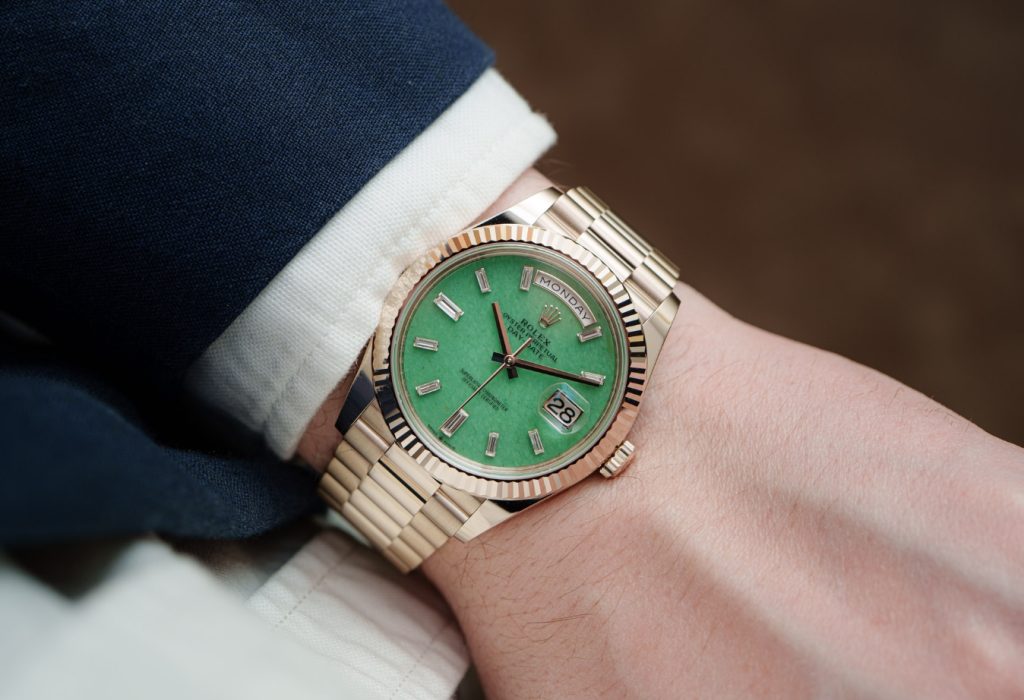
Genuine Day-Date models are associated with precious-metal cases and the President bracelet. A gold-coloured replica should not be described as 18 ct gold without material evidence. The weight, plating edges, bracelet construction, day display and date alignment all deserve separate inspection.
Unusual stone or aventurine-style dials add another challenge because texture and reflections change with light. See our green aventurine Day-Date design analysis for a closer look.
Daytona: a sports chronograph with more to reproduce
The Daytona’s three subdials, tachymeter bezel, pushers and chronograph movement create more opportunities for mismatch. A dial can look convincing in a still image while the subdials perform different functions from the genuine reference. Ask what each register measures and whether the chronograph starts, stops and resets correctly.
Gem-set Daytonas also show why context matters. The watch in our Australian Rainbow Daytona auction report was a documented genuine Rolex, not evidence that celebrities or collectors use replicas.
GMT-Master II and larger sports cases
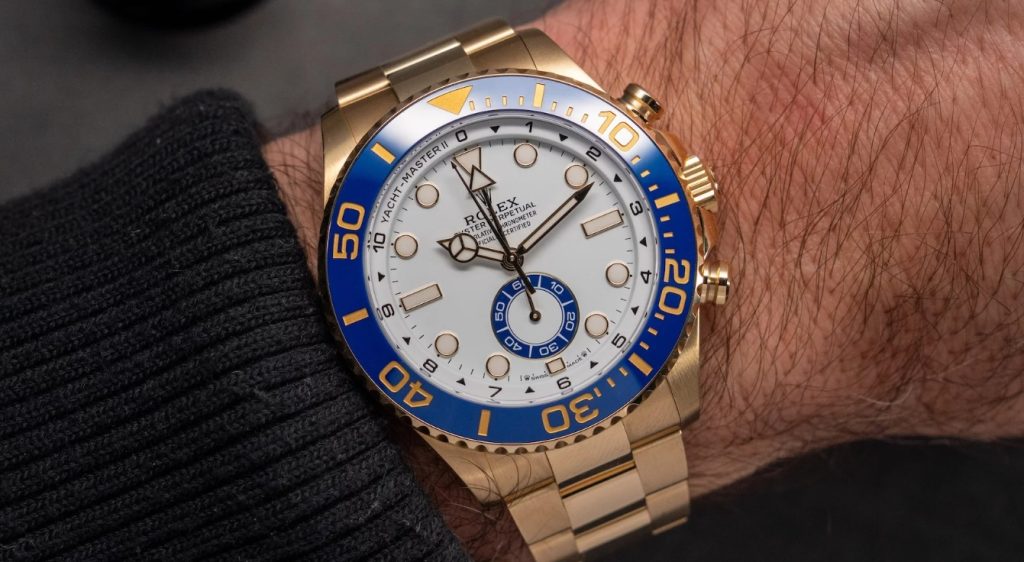
A GMT design brings a 24-hour hand and rotating bezel. On a smaller wrist, the end-link shape and bracelet articulation can matter as much as diameter. Replica comparisons should check whether the GMT hand is independently adjustable, how the hand stack is arranged and whether the bezel has the correct number and direction of clicks for the intended reference.
Use public style images carefully
A distant wrist shot can inspire a colour or proportion choice, but it should not be used to authenticate a watch or accuse its wearer of using a counterfeit. Reliable identification needs clearer reference evidence, and authentication requires more than appearance. The responsible approach is to discuss the design that is visible and keep claims about ownership and authenticity within the evidence.